Legal Ops
The Closing Checklist Shouldn't Start With You
Why deal management is the clearest proof-of-concept for proactive legal AI — and what good looks like.
 Jakub IdziakMay 14, 20265 min
The closing checklist is one of the most reliable pieces of evidence that something is wrong with how legal teams handle deals. Not because the checklist itself is flawed — it isn't. But because the fact that a person still has to build it, maintain it, and chase it reveals how much overhead sits around work that is fundamentally trackable.
Most of what goes into a closing checklist is knowable before anyone asks. The counterparties are identifiable from the first message. The structure of the deal dictates which documents are needed. Signature requirements follow from jurisdiction and entity type. None of this is novel information. It just has to be assembled, tracked, and kept current.
Where the overhead actually lives
The costly part of deal management isn't the analysis — it's the coordination. Who has reviewed what. Which party is holding up which item. What's been agreed verbally but not yet reflected in the document. These are the questions that eat associate time and create the conditions for things to slip.
A proactive system doesn't wait to be asked about the status of a closing item. It already knows — because it's been watching the thread, the document versions, and the calendar.
"The closing checklist is the perfect test case for what proactive AI in law actually means."
What good looks like
Good looks like Andy flagging on Monday morning that the signature page for the asset purchase agreement is still missing and closing is on Thursday. Good looks like the checklist being auto-populated from the term sheet before the first full team call. Good looks like the follow-up being drafted and sent the day after a deadline passes without confirmation.
None of that requires judgement. All of it currently requires a person. That's the gap legal AI should be filling — and it's where proactive, context-aware systems have the clearest advantage.
Jakub Idziak
Founder & CEO, Paremy
More from the blog
All posts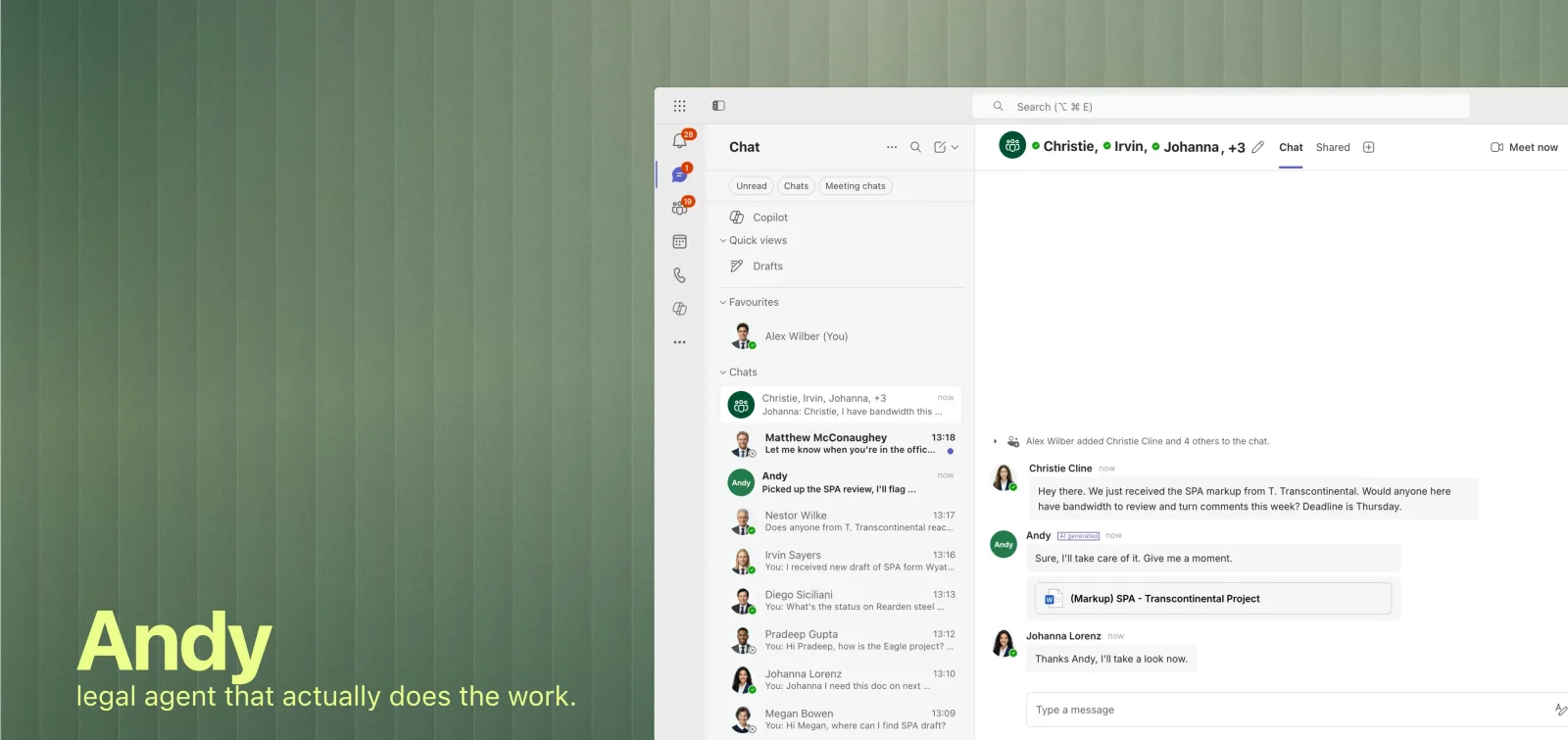
Announcement
Meet Andy
The legal agent that actually does the work. Introducing a new kind of AI built for legal teams, one that takes initiative, not just instructions.
June 10, 2026 · 5 min
Product
How Andy Reads a Matter Thread Before You Ask It To
A look under the hood at how contextual awareness is built into the core of how Andy operates.
May 28, 2026 · 4 min
Adoption
Why Legal Teams Don't Switch Tools (and What That Means for AI)
Institutional inertia isn't irrational. Here's how meeting teams where they already work changes the equation.
Apr 30, 2026 · 7 min
Ready to give your team their time back?
Book a demo and see Andy in action. Or just reach out and we'll take it from there.